


Lockdown and the value of communal worship
Tracy Chapman wrote:
I lose my head
From time to time
I make a fool of myself
In matters of the heart
In approaching this subject from the religious perspective, I have a sense of foreboding. Just as Robert F Kennedy opined that the main method we use for assessing the economy ‘measures everything in short, except that which makes life worthwhile’ so too the impact of the lockdowns on religion and the religious are tricky to gauge, and I tend to take the view that ideally the attempt shouldn’t be made. If we ever return to something broadly resembling the old normal there will come a time when we will be able to make a very in-depth assessment of the long-term overall damage of suspending social contact in so many ways, and for so many people for so long. But in matters of the heart, in the end quantifying the damage, and yes the benefits, will be impossible.
Religion and community
The key aspect of religion – and I speak primarily of my own Catholic belief, but I include all three Abrahamic faiths and the three main Indian religions, even Buddhism – is that it is all about both the relationship with the divine and a relationship with the community. Cutting off one from so much of the other, as both the 2020 lockdowns did, and for far longer in Scotland, will have been a cause of great suffering and loneliness for so many, because worship – the engagement with God – is above all a communal experience. Individual prayer, meditation and contemplation is, of course, vital. One of the main upsides to the first lockdown in particular will have been an intensification of prayer life for so many, but it cannot in the end substitute for the need to relate to God as a human cooperative.
Most religions do emphasise the benefits of temporarily depriving oneself of good things, partly to strengthen oneself in resisting the temptation to satisfy or indulge the bad or the not so good. I know of at least one alcoholic who during the first lockdown had finally managed to quit alcohol, and have heard of more who felt driven to turn their lives around. Speaking for myself, the pain and anguish of not being able to attend to prayer in church has also been a spur to develop my domestic church. This has been a particular challenge as I currently live on my own, but the process of my home more closely resembling a place of worship and prayer has begun in earnest, and I am resolved to establish this as a permanent aspect, as and when all restrictions on churches are removed. Lockdown has deprived me of much of the energy I needed to get this done, but it has been a strong corrective on the need for it to happen.
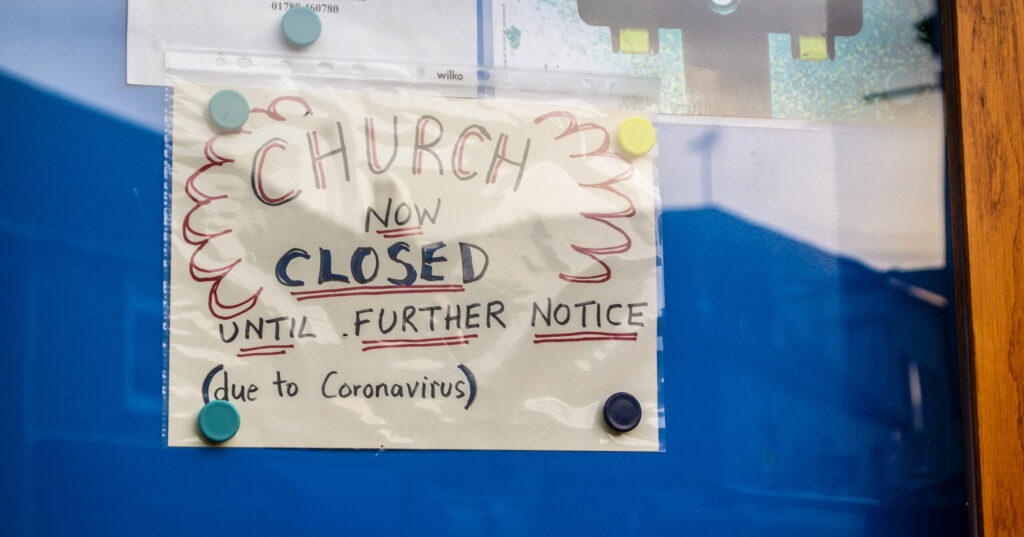
When services had ceased, but the churches were still open for three days back in March last year, I had a sense of hope. Being able to enter your local place of worship and prayer, even if unaccompanied by others, is a great source of solace for so many, and not just the single. Those who in any way find relationships at home at all chaotic and traumatic can experience particular grace and comfort in spending time in a communal space specifically designed to support them in seeking out such solace and relief. Depriving anyone of this for as long as we did will have done incalculable damage to the psychological and spiritual health of so many; there is little time and space to make room for God at home when you’re a mother with an abusive husband. So, the November lockdown, when services were suspended but churches were kept open, was the better balance, and should have been kept in place for the first lockdown.
Reckless caution
In religion, as with so many other matters, an overabundance of caution combined with an understandable desire to put everyone in something like the same boat, will I think prove to have been reckless in the face of many of the other dangers that humanity faces. Indeed, those who are highly vulnerable to death because of Covid, and those that live with them, have had little choice but to fully isolate (shield) for over a year regardless of the locking down of everyone else. This has meant that government and society as a whole did not focus in on the needs of those who probably had to cut themselves off from physical and social contact.
Without authentic religion, society’s answer to fear becomes ‘security’.
I am still amazed that it wasn’t until 2021 that getting a Covid test and then going on to visit your grandparent in a care home on the same day was introduced. Imagine for a moment that early on we shielded all those seriously vulnerable to dying from or with Covid, but made most of lockdown much less onerous on the economy and the rest of society. Inevitably, meeting the needs of those completely shut off from normal life would have become a top priority alongside the energy and dynamism that has led to our successful vaccination programme. No social or financial expense should have been spared on providing the much-needed social interaction for those of us who will remain effectively under what resembles house arrest until they, or indeed most of the country, has been fully vaccinated.
The leading of a godly life to the best of your abilities, which without divine assistance and a supportive community leads to abject failure, is all about living in hope. It is hope tempered by caution that is the antidote to fear, but without authentic religion, and the genuine practice of a virtuous life, society’s answer to fear in the end becomes ‘security’. The result is a doubling down where we never really return to those freedoms that are so vital to a vibrant developing society. Having utilised fear as a tool to aid government in its efforts to control human behaviour, then as that fear subsides, the desire to control will be all the harder to shake off. Such a predicament would have been less binding had our disposition in this pandemic remained one anchored in openness alongside a practical awareness of the serious threats we faced.
That all places of worship have been able to remain open, at least in England, from the end of the first lockdown until the present day without any evidence of the need to close a single one is a testament to what could and should have been possible from Easter 2020 onwards. The authorities should have made a more considered effort to prioritise those measures that definitive evidence demonstrated were vital to combat this wretched disease without so endangering all our other vulnerabilities from cancer to psychological breakdown.
Fear in the sense of a humility in the face of genuine danger is healthy; fear as an ongoing or permanent temperament – or worse still implicitly animating it as some kind of virtue, especially when applied to only one potential cause of death – is deeply unhealthy. If those of us who are religious, and indeed our religious leaders, can learn one thing well from this past 12 months it is how to better communicate that our traditions underpin so much of what we hold dear, whether that be the relationships with our friends, family and loved ones or the philosophical principles that we seek to adhere to in our daily lives.
In the end it is love – not in the sense of the mushiness of emotional feelings, but of persistent serving of those we know and meet that – will be our redemption.
Ed Rennie
Catholic political writer, analyst and strategist
Ed Rennie is leading advocate and strategist for Blue Labour within the labour movement. Ed has worked at Christians on the Left and for the Labour MPs Emily Thornberry and Jim Dobbin and was a Labour Councillor for Perivale.
More recently he led the virtue policy programme at the think tank ResPublica and worked for John Mills helping to found Labour Future and wrote for Labour Leave.
In a voluntary capacity he has been a support line volunteer for the National Association for People Abused in Childhood (NAPAC), and is a founding member of Catholic Voices.
Follow Ed on Twitter: @edrennie77
More voices on Cultural life


Lockdown: sanitising the arts


Lockdown: closing the door on culture

